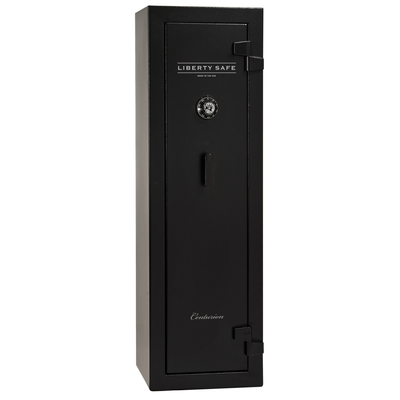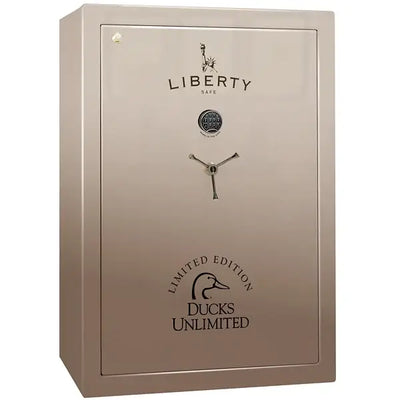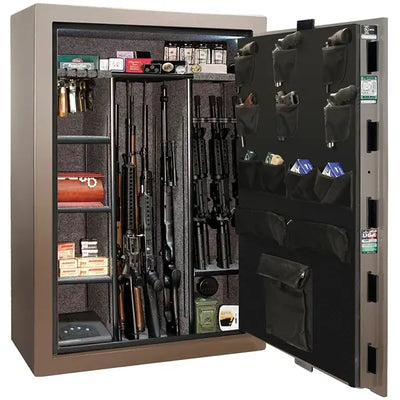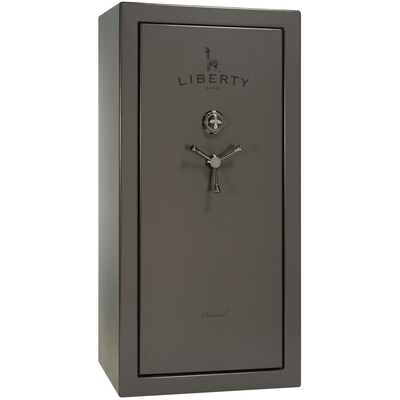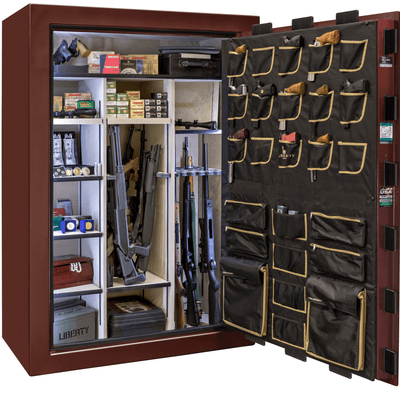

Why a Liberty Safe Is the Best Safe for Home
- Why "Best Safe for Home" Is the Wrong Question
- How Liberty Builds Its Safes (and Why the Steel Gauge Matters)
- Locks, Anti-Pry Design, and Relockers: What Actually Stops a Burglar
- Fire Ratings: What They Mean and What They Don't
- Sizing: The Mistake I See on Half My Deliveries
- Where to Put It: Installation, Anchoring, and Humidity
- Liberty vs. Other Brands: An Honest Comparison
- Warranty and After-Sale Support
- Does a Safe Add Value to Your Home?
- So, Is a Liberty Safe the Best Safe for Home Use?
- Frequently Asked Questions
Updated: July 2026
My name is Kirillo Byelin. I'm the General Manager at The Safe Keeper's Las Vegas location, and I supervise delivery and installation. I've spent more than ten years on the other side of the sale, standing in people's garages with a stair-climber and a moving blanket, bolting safes to concrete slabs and second-story floor joists.
That job teaches you things a spec sheet never will. I've seen safes that survived a house fire and safes that got pulled out a back door because nobody anchored them. I've watched customers open a keypad for the first time in three years and discover the battery leaked. I've had to tell a man his beautiful 60-gun safe wouldn't fit through his hallway.
So when people ask me whether a Liberty safe is the best safe for home use, my answer isn't a simple yes. It's: best for what, and best compared to what? Let me walk you through how I actually think about it.
Why "Best Safe for Home" Is the Wrong Question
There's no single best home safe, the same way there's no single best vehicle. A safe is a delay device. It buys you time against two threats, a burglar and a fire, and it's rated differently against each one.
Here's the distinction most buyers never hear:
- Residential security containers (RSCs) are what nearly every gun safe on the market is, including most Liberty models. The UL RSC rating means the safe resisted a five-minute attack by one person with common hand tools.
- Burglary safes carry ratings like TL-15 or TL-30. Those mean a UL technician with power tools, cutting torches, and full knowledge of the safe's construction needed 15 or 30 minutes of net working time to get in. These weigh far more and cost several times as much.
Neither is better in the abstract. If you're storing a rifle collection and family documents in a suburban home, an RSC-rated safe is the right tool. If you're storing loose diamonds, you need something else. Anyone who tells you a gun safe is "impenetrable" is selling, not advising.
With that framing, Liberty makes a lot of sense for most households. Here's why.
How Liberty Builds Its Safes (and Why the Steel Gauge Matters)
Liberty forms its safe bodies and doors from American carbon steel, ranging from 14-gauge on entry-level models up to 7-gauge on the heavy end. That range matters more than people realize. Gauge numbers run backwards, so lower is thicker. Fourteen-gauge is about the thickness of two credit cards. Seven-gauge is closer to an eighth of an inch.
The practical difference: I can dent 14-gauge with a hard hit from a maul. Seven-gauge just absorbs it. If you look at how safes actually get defeated in real burglaries, it's rarely the lock. It's the thin sheet metal on the side or back, peeled open with a pry bar or punched through with a sledge and a chisel.
Liberty's better lines also avoid seams across the front and sides of the body. A seam is a stress point, and a stress point is where a pry bar finds purchase. The seamless forming isn't marketing language; it's the reason the door frame holds its geometry when someone leans on it.
The safes carry UL listings covering both the body and the lock. That's a third party verifying the claim rather than the manufacturer verifying itself, which is the part that matters.
What I'd tell a friend: if your budget forces a choice between a bigger 14-gauge safe and a smaller 11-gauge, take the thicker steel. You can always add a second safe. You can't add steel later.
Locks, Anti-Pry Design, and Relockers: What Actually Stops a Burglar
The lock itself
Liberty offers mechanical dial locks, electronic keypads, and biometric options. People agonize over this choice more than they should, because a burglar with five minutes almost never attacks the lock. Attacking the lock is slow, loud, and requires knowledge. Attacking the door seam is fast.
Still, the lock is what you interact with every day, so pick for your life, not for the threat model:
- Mechanical dial. Slowest to open, essentially immortal. No batteries, no electronics, nothing to fail in a 118-degree garage. I still run one at home.
- Electronic keypad. Fast, and fine, as long as you change the battery on a schedule instead of waiting for it to die. Buy a UL-listed lock from a known maker. The cheap keypads on off-brand safes are the single most common service call I get.
- Biometric. Convenient for quick access to a handgun. Sweaty, cold, or dirty fingers reduce reliability. Always know the backup entry method before you need it.
Anti-pry and the hardware behind the door
The door is a thick steel plate, and the locking bars are what hold it in place. Liberty's Solid State locking bars present a broader bearing surface than the round pins many competitors use, so a pry attack has to deform far more steel to gain any gap.
Behind the lock sits a hardplate, a hardened steel disc that chews up drill bits. And behind that sits a relocker, a spring-loaded pin that fires if someone punches the lock or drills into the mechanism. Trigger the relocker and the safe locks itself permanently. The owner can't open it either. That's the point.
I mention this because I've had to bring a locksmith to a house where a relocker fired during an attempted break-in. The homeowner was frustrated by the repair bill. The rifles were still inside.
Fire Ratings: What They Mean and What They Don't
This is where I get the most pushback, and where I think honest information helps buyers most.
Liberty builds fire protection from layers of fireboard sandwiched into the body and door, plus a Palusol heat-activated seal around the door edge. When the seal hits roughly 220°F, it expands several times its thickness and chokes off the gap where smoke and heat would otherwise enter. Higher-tier models add Liberty's Cool Box construction around the door, which is where most heat gets in on lesser safes.
Now the part nobody advertises:
- Gun safe fire ratings are not UL fire certifications in most cases. They come from manufacturer testing, and the test protocols aren't standardized across brands. A "90-minute" rating from one company isn't automatically equal to a "90-minute" rating from another.
- Paper chars around 400°F. Photographs curl well before that. Hard drives, ammunition primers, and film degrade lower still. A rating that keeps the interior under 350°F protects documents. It's less friendly to a backup drive.
- Fire ratings assume the safe stays upright. If a house collapses and the safe falls through a floor into a burning basement, all bets change.
None of this means Liberty's fire protection is oversold. In my experience it performs. It means you should think of the rating as a tested ceiling under controlled conditions, not a warranty against physics. Put irreplaceable digital media in a rated media container inside the safe. Keep a copy off-site. That's what I do.
Sizing: The Mistake I See on Half My Deliveries
Almost nobody buys a safe that's too big. Enormous numbers of people buy one that's too small.
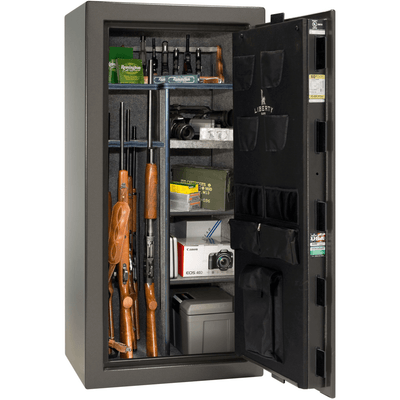
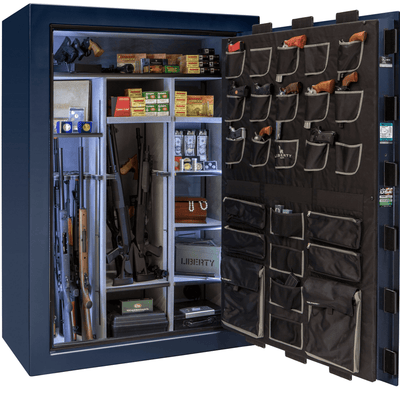
A safe rated for "24 long guns" holds 24 bare rifles standing in a rack, with nothing on them. Add a scope, a sling, a bipod, and a red dot, and that number drops to roughly 12 to 16 in the real world. Add a door organizer and your handguns, ammunition, deed, passports, and the coin collection your father left you, and it drops again.
My rule, and I say this to every customer at the shop:
Count what you own today. Double it. Then buy the next size up.
You will accumulate. Everyone accumulates. And the second most expensive safe you'll ever buy is the one you bought too small the first time, because now you're paying for delivery, installation, and disposal twice.
Before you order, measure three things: the doorway width, the tightest turn in the path, and the ceiling height at any stairwell. Then measure your safe's door swing, not just the body. A safe crammed into a closet corner where the door only opens 45 degrees is a daily irritation.
Where to Put It: Installation, Anchoring, and Humidity
This is the part of the process I supervise personally, and it's the part that gets skipped most often.
Anchor it. Always.
An unanchored safe is furniture. Two people with a hand truck and a pickup can take a 700-pound safe out of a house in under ten minutes. I've seen the aftermath. Liberty pre-drills anchor holes in the base for this exact reason.
- Concrete slab or garage floor: wedge anchors or sleeve anchors into the slab. This is the strongest and easiest anchor there is.
- Wood subfloor: lag bolts through the floor into joists. Not into the subfloor plywood alone. You need to find the joists, and sometimes that means the safe goes where the joists are rather than where you pictured it.
- Second story: this needs a look before delivery day. Most modern framing handles a 600 to 800 pound safe placed near a bearing wall. Placed dead center of a long span, in an older home, it deserves a conversation and sometimes an engineer.
Location tradeoffs
Interior closets and bedrooms are quiet, climate-stable, and out of view. Garages are convenient and easy to anchor, but in Las Vegas a garage swings between 45°F in January and 120°F in July, and that thermal cycling is hard on electronics, ammunition, and finishes. If a garage is your only option, put the safe on an exterior-adjacent wall away from the vehicle door, and use a dehumidifier rod.
Humidity, both directions
Everyone worries about moisture. In humid states, a rechargeable desiccant or a low-wattage golden rod prevents surface rust on blued steel. Here in the desert we have the opposite problem: air so dry that wood stocks shrink and check. If you store fine walnut, a small humidity control unit inside the safe is worth the trouble.
And keep the safe visually boring. Don't post it online. Don't give the tour. The best security feature any safe has is that nobody outside your household knows it exists.
Liberty vs. Other Brands: An Honest Comparison
I sell more than one brand, so let me be straight about where Liberty sits.
Against budget safes (the ones sold at big-box stores under various names): Liberty's entry models use comparable steel, but the door hardware, the lock quality, and the fire construction separate quickly. More importantly, the budget category has spotty service. When a keypad fails on a no-name safe, you often can't get the part.
Against premium American builders like Graffunder, Sturdy, or the heavier American Security lines: some of these use thicker plate steel or offer true burglary ratings. Sturdy, for instance, is candid that it prioritizes steel over fireboard, which is a legitimate philosophy. If your only concern is pry and cut resistance, a thicker-bodied competitor may beat a comparable Liberty on raw steel per dollar.
Where Liberty genuinely leads: breadth of lineup, fire protection engineering at consumer price points, dealer network, and warranty support. Liberty makes safes from apartment-sized units to walk-in vault doors, in dozens of configurations. If something goes wrong in year eight, there is a company still standing to answer the phone. That last item is worth more than most buyers appreciate when they're comparing spec sheets.
On the trust question: Liberty took heat in 2023 after providing a safe's factory access code to federal law enforcement acting under a warrant. The company subsequently changed its policy so that factory codes are removed from its database by default at the customer's request. I bring it up because customers ask me about it, and because pretending it didn't happen would be worse than addressing it. Every major manufacturer keeps factory codes for lockout recovery. Liberty now lets you delete yours. If that matters to you, do it the week your safe arrives.
Warranty and After-Sale Support
Liberty's warranty is one of the stronger ones in the category. The safe body carries a lifetime warranty that transfers to a new owner, which is unusual and does show up as a small selling point on the resale of a home with a built-in safe. Lock mechanisms carry shorter coverage, typically five years, with extended terms available on higher lines.
The provision I actually value is the fire-and-break-in coverage. If your safe is damaged in a qualifying fire or attempted burglary, Liberty's warranty has historically covered repair or replacement of the safe, freight on the new unit, installation, and removal of the damaged one. Having personally hauled a burned-out safe out of a Henderson garage, I can tell you the removal clause is not a small thing. A 900-pound safe full of fireboard that's absorbed water from a fire hose is a genuinely miserable object.
Warranty terms change. Read the current document that ships with your safe rather than trusting a blog post, including this one.
Does a Safe Add Value to Your Home?
Modestly, and mostly when it's built in. A freestanding safe is personal property, and it goes with you unless you negotiate otherwise. A safe recessed into a closet or framed into a wall reads as a home feature, and buyers of higher-end homes do respond to it.
The transferable body warranty helps here. So does finish. Liberty's color, hardware, and interior options mean the safe in a master closet can look like cabinetry rather than a shipping container. That's not security, but it does determine whether the safe lives where it's convenient or gets exiled to the garage, and a safe you actually use is worth more than a nicer safe you don't.
Talk to your insurance agent, too. Some carriers reduce premiums on scheduled firearms or jewelry when they're stored in a rated container. It's not universal, but I've had customers get a rider adjustment that paid back part of the safe over a few years.
So, Is a Liberty Safe the Best Safe for Home Use?
For most homeowners, yes, and here's the honest reasoning rather than the sales version.
Liberty isn't the thickest steel you can buy. It isn't a TL-30 burglary safe. What it is, consistently, is a well-engineered residential security container with fire protection that has been tested harder than most of its competitors', a lock and hardware package that resists the attacks burglars actually use, a warranty that survives a bad day, and a dealer network that answers the phone. Across the range of price points where real families actually shop, that combination is hard to beat.
The safe is only half of it, though. The best safe for your home is the one that's sized for what you'll own in ten years, anchored into something structural, placed somewhere you'll actually open it, and unknown to anyone outside your household. I've installed excellent safes badly and watched them fail. I've never seen a properly anchored, appropriately sized safe fail the person who bought it.
If you're weighing models, come measure with us before you buy. Bring the doorway dimensions. Bring the count of what you own. We'll do the rest.
Frequently Asked Questions
Are Liberty safes actually made in the USA?
Liberty manufactures its safes in Payson, Utah, using American carbon steel. Some components, like certain lock mechanisms and interior hardware, are sourced from outside suppliers, which is true of essentially every safe brand. The body forming, welding, fireboard installation, and finishing happen domestically.
What gauge steel should I look for in a home safe?
For meaningful pry and punch resistance, 11-gauge or thicker on the body is the practical floor. Fourteen-gauge safes are fine for keeping firearms away from children and casual visitors, and they satisfy most storage laws, but a determined attacker with a sledge can compromise them. If your safe will hold significant value, look at 10-gauge, 7-gauge, or plate-steel construction.
How much does a Liberty safe weigh, and can my floor handle it?
Liberty safes range from roughly 300 pounds for compact models to well over 1,500 pounds for large vault-style units. A typical mid-size 30-gun safe runs 600 to 800 pounds. Ground-floor concrete slabs handle any of them. For a second-floor installation, the safe should sit near a bearing wall or across multiple joists rather than centered on a long span. In an older home, have someone look at the framing before delivery.
Do I really need to bolt down my gun safe?
Yes. An unanchored safe can be tipped, walked, or wheeled out of a house by two people. Anchoring converts a portable box into a fixed obstacle and forces an attacker to work on your property, in the open, for as long as the steel holds. It's the highest-value 30 minutes of the entire installation.
Is a Liberty safe waterproof?
No, and be skeptical of any gun safe marketed as waterproof. The door seal that expands during a fire does not create a submersion-proof enclosure at room temperature. Firefighting water, flooding, and burst pipes can all get in. Store documents and currency inside a sealed bag or a waterproof container within the safe.
Electronic lock or mechanical dial: which lasts longer?
Mechanical dials last decades with minimal service and never need power. Quality electronic locks typically run 10 to 20 years and open far faster. Neither is wrong. Choose a mechanical dial if the safe lives in an extreme-temperature space or you want the fewest possible failure points. Choose electronic if you'll open the safe often. Whichever you pick, buy a UL-listed lock and know your backup access procedure.
Can I move a Liberty safe myself?
I'd rather you didn't. Safes are top-heavy, the center of gravity shifts when the door swings, and a tipping 700-pound object doesn't give you time to move. Professional movers use stair-climbing equipment, load-rated straps, and floor protection, and they carry insurance for the day something goes wrong. If you're set on doing it yourself, empty the safe, remove the door if the model allows, and hire equipment rather than borrowing a furniture dolly.
How long will a fire rating actually protect my documents?
A safe rated for 90 minutes at 1,200°F held its interior below the tested threshold for that duration in a controlled furnace. Real fires vary in temperature, duration, and how the structure collapses. Treat the rating as a strong indicator rather than a guarantee, keep digital backups off-site, and store photographs and electronic media in a separate media-rated container inside the safe.
What size Liberty safe should I buy?
Count the firearms and valuables you own now, double the number, and buy one size larger than that. Manufacturer gun capacities assume bare rifles with no optics. With scopes and slings, expect to fit roughly half the advertised count. Then measure your doorways, stair turns, and the space needed for the door to open fully before you order.
Written by