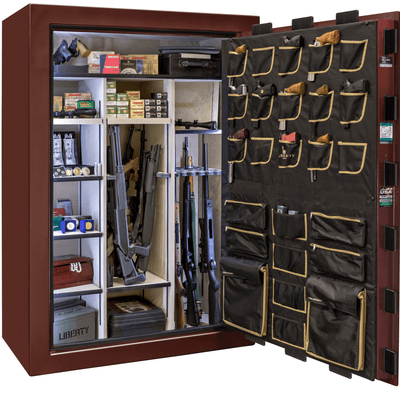

Where Are Liberty Safes Made? The American Manufacturing Story
- Why the Question Comes Up on Almost Every Delivery
- How Liberty Safe Started
- Where Liberty Safes Are Made Today
- Inside the Payson Plant: From Flat Steel to Finished Door
- Who Makes Liberty Safes
- Who Owns Liberty Safe
- What Liberty Builds in Payson
- "Made in USA" vs. "Assembled in USA": How to Check Any Safe
- What Domestic Manufacturing Means When Something Goes Wrong
- Liberty's Paint and Waste Systems
- About the 2023 Factory Code Controversy
- Frequently Asked Questions
Updated: August 2026
Why the Question Comes Up on Almost Every Delivery
I've spent more than ten years at The Safe Keeper, and most of that time has been on the delivery side. I've moved safes down basement stairs in older Vegas homes, up driveways with a 20-degree pitch, and into more garages and closets than I can count. Somewhere in the middle of that job, usually while we're setting the safe on the dolly, the customer asks the same thing: "Where's this thing actually built?"
For Liberty, the short answer is Payson, Utah.
The longer answer is the part worth reading. Where a safe gets built determines the steel it's made from, how tight the door fits, how long you wait for a replacement part, and whether the warranty is backed by a factory you can call or a distributor waiting on a container ship. I've seen all of those play out on job sites, and the difference is more practical than patriotic.
How Liberty Safe Started
Liberty Safe began in 1988, founded by Jay Crosby, an engineer who started the operation out of a single storage unit with eight employees. They built six safes a day.
That's a detail worth sitting with. Six safes a day is a hand-built pace, and the early reputation came from that: heavy plate, careful welds, and a fit-and-finish standard that mattered more to them than volume. Demand followed. Within about a year, Liberty moved into a 25,000-square-foot production facility in Provo, Utah.
In 1995, Crosby sold the company to an investor, and Liberty grew quickly, roughly doubling sales and profitability in under four years. Headquarters moved to Springville, a second production site opened in Provo, and a 45,000-square-foot distribution center went up in Spanish Fork. All of it stayed inside Utah County, which is unusual. Most manufacturers that grow at that rate end up scattering operations across states or borders.
Where Liberty Safes Are Made Today
Liberty safes are made in Payson, Utah, about 60 miles south of Salt Lake City.
In 2001, the company pulled everything into one 200,000-square-foot plant in Payson. By 2013 that building had grown to roughly 300,000 square feet. At peak output, the plant can turn out somewhere in the range of 500 to 700 safes a day, depending on the model mix. Presidential and Magnum bodies take considerably longer to build than a Centurion, so daily counts move around.
In July 2018, Liberty was invited to the White House "Made in America" showcase, one of a small group of manufacturers chosen to represent domestic production. That's more of a footnote than a spec, but it does mark the point where the company was operating at national scale entirely out of one American building.
Inside the Payson Plant: From Flat Steel to Finished Door
I've walked through Payson, and what surprises most people is how little of it looks like an assembly line and how much of it looks like a fabrication shop.
The rough sequence:
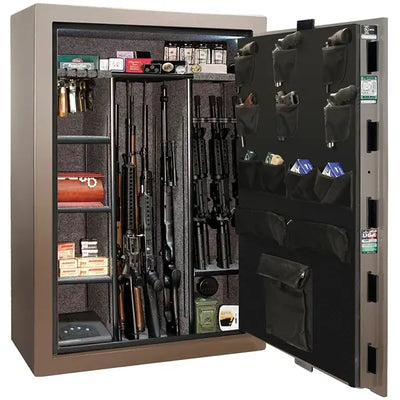
- Steel arrives flat and gets cut and punched to size. Body gauge varies by series, from lighter gauge on entry-level models up to 7-gauge plate on Presidential and Magnum bodies.
- Bodies are formed and welded into a single shell. A one-piece body with continuous welds is much harder to peel than a bolted-together box, and this is where a lot of the real burglary resistance comes from.
- Doors are built separately with the locking bar assembly, relocker, hardplate, and lock mount. Door fit is the tightest tolerance in the whole build.
- Fire board is cut with high-pressure water jets to precise dimensions, which lets Liberty pack lining into corners and around the door frame where looser tolerances would leave gaps.
- Powder coat and cure, then interior fitout, lock installation, testing, and crating.
The waterjet step is the one I'd point to if someone asked what separates a serious plant from a budget one. Fire protection fails at the seams, not in the middle of a panel. Cutting board to a tolerance that lets you fill the awkward spots is unglamorous work that shows up years later when a house burns.
Who Makes Liberty Safes
Roughly 400 people, most of them in Payson.
That number includes welders, press operators, paint line techs, fire board fabricators, lock installers, engineers, and QC. The company that made six safes a day with eight people now runs shifts of hundreds, and a lot of those employees have been there a long time. When I've had a technical question about a door mechanism on an older model, I've been handed to someone who personally remembers when that mechanism changed.
That's the part that doesn't show up in a spec sheet. Institutional memory in a factory is worth something when you're servicing a 15-year-old safe.
Who Owns Liberty Safe
Liberty Safe is owned by Monomoy Capital Partners, a private investment firm focused on middle-market manufacturing and consumer products businesses. Monomoy acquired Liberty in 2021 from Compass Diversified in a deal reported at roughly $147.5 million.
Customers ask me whether private equity ownership changed the product. From what I see coming off trucks week to week, the manufacturing footprint stayed in Payson and the core build standards held. Ownership changes are worth knowing about, but the more useful signal is whether the plant location and the warranty terms moved. In Liberty's case, neither did.
What Liberty Builds in Payson
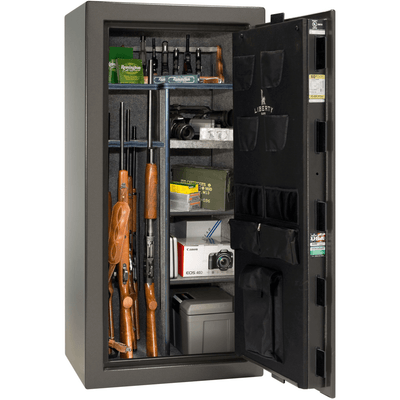
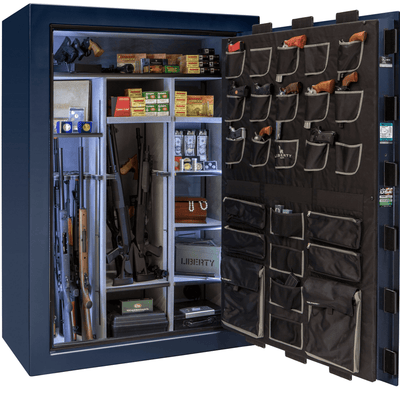
Liberty's main gun safe series run from entry-level to flagship:
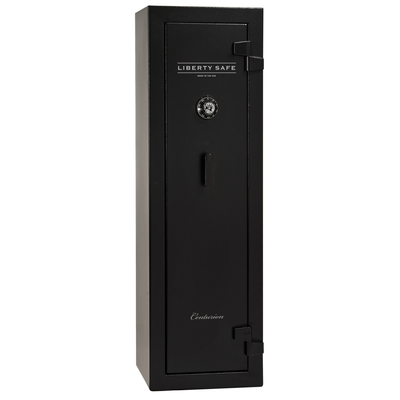
- Centurion — the entry point, lighter gauge, 30 to 40 minutes of fire protection
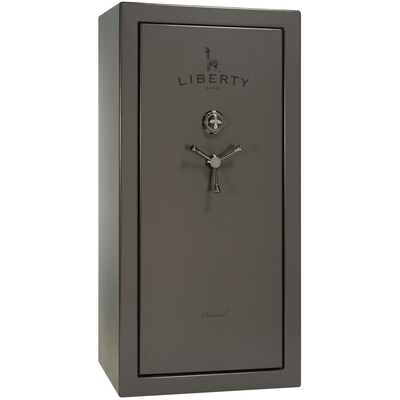
- USA and Colonial — mid-range, heavier body and better fire ratings
- Franklin — a step up in steel and fit, around 110 minutes of fire protection
- Lincoln — larger capacity, thicker plate
- Presidential — 7-gauge body, top-tier fire rating around 150 minutes
- Fatboy — the wide-body models built for high capacity at a moderate price
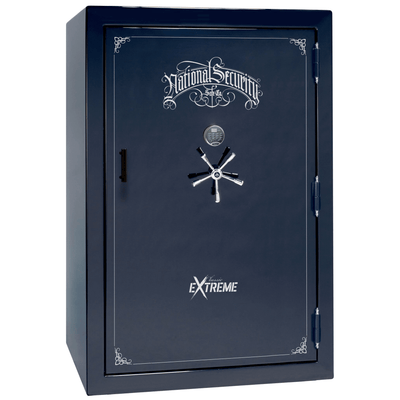
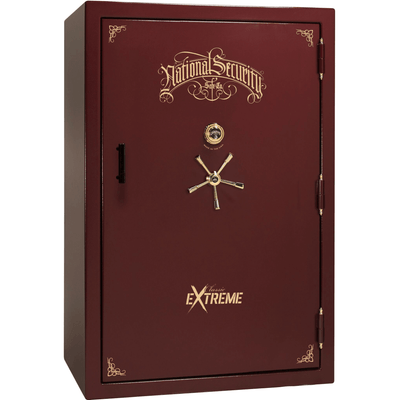
- National Security Magnum — 7-gauge body with fire ratings up to about 2.5 hours
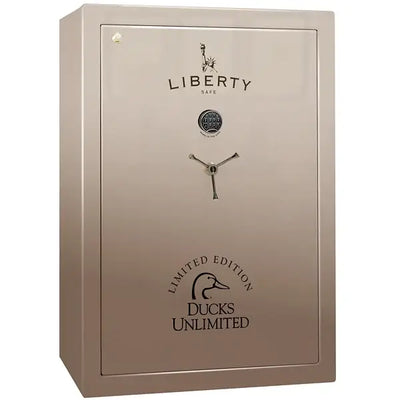
Beyond gun safes, the company builds home safes, fire and document safes, commercial safes, and accessories. It has also produced safes under the National Security, Centurion, and Freedom Security names, and over the years has manufactured private-label safes for outdoor and equipment brands.
If you're comparing two models and only looking at fire minutes, add body gauge and door thickness to the comparison. Fire rating and burglary resistance are separate problems, and the marketing number on the front tag only addresses one of them.
"Made in USA" vs. "Assembled in USA": How to Check Any Safe
This is the section I wish more buyers read before they call us.
The FTC's Made in USA Labeling Rule (16 C.F.R. Part 323) sets a standard called "all or virtually all." To label a product "Made in USA" without qualification, final assembly, all significant processing, and essentially all components have to be domestic. Companies that can't meet that bar are allowed to use qualified claims instead, like "Assembled in USA" or "Made in USA with imported parts," as long as the wording is clear and accurate. Violations carry civil penalties.
Those two phrases sit next to each other on a shelf and read almost identically to a shopper. They mean very different things.
Here's how I check a safe's origin when someone asks me to look at a competing model:
- Read the exact wording, not the flag graphic. "Assembled in USA," "American design," "U.S. engineered," and "American steel" are all qualified or partial claims. Only an unqualified "Made in USA" is making the full assertion.
- Find the spec label inside the door. Manufacturer, plant location, and model data are usually printed there rather than in the sales copy.
- Ask the dealer one direct question: what city is this model built in? A dealer selling a domestically built safe will name the town without hesitating.
- Check whether the claim is per-model or brand-wide. Some brands build premium lines domestically and import their entry-level models. Origin can change between two safes wearing the same logo.
- Look at the warranty service address. If parts and claims route through an importer's warehouse rather than a factory, that tells you where it was made.
- Weigh it against its size. A 60-inch safe that weighs 500 pounds and a 60-inch safe that weighs 850 pounds are not built to the same standard, whatever either label says.
One honest note about Liberty, and about every safe maker I know of: the body, door, welding, fire lining, and finish work happen in Payson, but small components like electronic lock modules and some hardware come from outside suppliers. That's normal across the industry. Anyone claiming every screw in a safe originated domestically is stretching.
What Domestic Manufacturing Means When Something Goes Wrong
Most of the value of a U.S.-built safe shows up after the sale, and this is the part I have the most direct experience with.
Parts. If a customer needs a replacement shelf kit, door panel, handle, or lock module, a Payson-built safe means the part ships from a warehouse in Utah. We're usually looking at days. On imported models, I've watched customers wait months when a part isn't already stateside, because the fix isn't in a warehouse, it's in a production run.
Warranty claims. A domestic factory can be called by a human being who can pull the build record for your serial number. That matters when the question is technical rather than clerical.
Service after a fire or break-in attempt. This is the scenario nobody plans for. Liberty's lifetime warranty covers fire and attempted burglary damage on covered models, which means the safe gets replaced rather than argued about. That policy only works because the replacement can actually be built.
Getting it into the house. Not a manufacturing point exactly, but related: heavier domestic safes are harder to move, and that's the tradeoff for the steel. Measure your doorways and check your stair turns before you buy. I've had to reroute a delivery through a back patio more than once because a hallway turn was four inches too tight. If you're in the Las Vegas area, tell us about stairs and turns up front and we'll plan the route.
Liberty's Paint and Waste Systems
Two parts of the Payson operation are worth mentioning because they're unusual for a heavy manufacturer.
The paint system removes about 95% of volatile organic compounds, which puts it near the top of domestic finishing operations for emissions control. Overspray from the powder-coating booth is captured and recycled back into the process rather than landfilled.
The waterjet fire board cutting I mentioned earlier creates a specific waste problem: saturated, heavy board scrap. Liberty extracts the water from that scrap before disposal, which cuts both the weight and the volume going out the door.
Neither of these makes your safe more secure. They do tell you the plant is run to a standard, and in my experience shops that manage their waste well tend to manage their tolerances well too.
Frequently Asked Questions
Are Liberty safes made in the USA?
Yes. Liberty safes are built in Payson, Utah, in a facility of roughly 300,000 square feet. Bodies, doors, welding, fire lining, and finishing all happen there. As with essentially all safe manufacturers, some small components such as electronic lock modules come from outside suppliers.
Where exactly is the Liberty Safe factory?
Payson, Utah, about 60 miles south of Salt Lake City in Utah County. The company consolidated operations there in 2001 and expanded the building in 2013.
Who owns Liberty Safe?
Monomoy Capital Partners, a private investment firm, which acquired Liberty from Compass Diversified in 2021.
Who founded Liberty Safe?
Jay Crosby, an engineer, founded the company in 1988. It started in a single storage unit with eight employees making six safes a day.
How many safes does Liberty make per day?
At peak output the Payson plant can produce roughly 500 to 700 safes daily, depending on the model mix. Heavier series take longer to build than entry-level models.
What brands and product lines does Liberty Safe make?
Gun safes, home safes, fire and document safes, commercial safes, and accessories. Series include Centurion, USA, Colonial, Franklin, Lincoln, Presidential, Fatboy, and National Security Magnum. Liberty has also built safes under the National Security, Centurion, and Freedom Security names, plus private-label products for other brands.
Is a Liberty safe better than an imported gun safe?
It depends on which models you're comparing. Compare body gauge, door thickness, weight relative to size, fire rating and the testing method behind it, lock type, and warranty terms. Domestic manufacturing mainly improves parts availability, warranty service speed, and shipping condition. It doesn't automatically make one model stronger than another.
What's the difference between "Made in USA" and "Assembled in USA"?
Under the FTC's Made in USA Labeling Rule, an unqualified "Made in USA" claim requires that a product be "all or virtually all" domestic, including final assembly, significant processing, and components. "Assembled in USA" is a qualified claim, meaning meaningful portions were made elsewhere and put together here.
Does Liberty still keep a record of my safe's combination?
Liberty allows customers to request permanent removal of their code from company records, and states that proper legal process is required before releasing any retained code. Whatever brand you own, change the factory combination after installation.
Does a U.S.-built safe cost more?
Usually, yes, on comparable specs. You're paying for domestic steel, labor, and freight. What you get back is faster parts, faster warranty resolution, and a factory that can be reached directly.
Written by