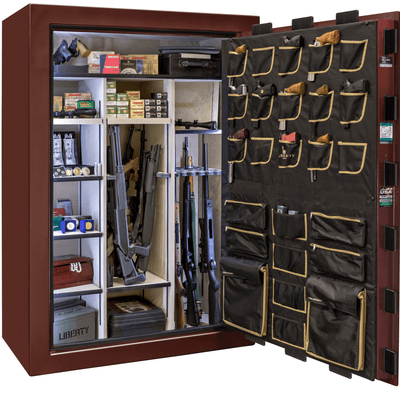

Where to Put a Gun Safe in Your House
- Why Placement Matters More Than Most People Think
- The Four Questions I Ask Before Anything Moves
- The Rooms That Usually Work
- Where I Tell People Not to Put a Gun Safe
- Can Your Floor Actually Hold It? Gun Safe Weight and Floor Load
- Putting a Gun Safe Upstairs: What It Really Takes
- Fire Protection Starts With the Location
- Humidity, Rust, and Why Your Safe Needs a Dehumidifier
- Water Damage Is the Threat Nobody Plans For
- Hiding a Gun Safe Without Making It Useless
- What to Set the Safe On: Concrete, Wood, Tile, and Carpet
- Bolting Down a Gun Safe: The Part People Skip
- Renting? Here's How to Do It Without Losing Your Deposit
- My Placement Checklist
- FAQ
Updated: August 2026
Why Placement Matters More Than Most People Think
I've delivered and installed safes in Las Vegas homes for over ten years. In that time I've seen a lot of good safes end up in bad spots, and I've watched what happens afterward.
I've pulled rusted shotguns out of a safe that sat against an exterior garage wall for two summers. I've seen a 900-pound safe crack a tile floor because nobody checked what was under it. And I've been called out to a house where the fire department saved the structure, but the basement filled with three feet of water and the safe sat in it overnight.
None of those were bad safes. They were good safes in the wrong place.
Where you put a gun safe decides how it performs against the three things that actually destroy stored firearms: fire, moisture, and a burglar with time on his hands. It also decides whether the safe damages your house on the way in. Let's go through it the way I do on a site visit.
The Four Questions I Ask Before Anything Moves
Before my crew unloads anything, I walk the house and answer four things.
Can we physically get it there? I measure door widths, hallway turns, and ceiling height at the tightest point. A 60-inch-tall safe on a dolly needs more vertical clearance than the safe itself. Tight 90-degree turns at the top of a staircase stop more deliveries than stairs do.
Will the floor carry it? More on this below, but a full-size safe concentrates a lot of weight on a small footprint.
Is the environment stable? Temperature swings and humidity are slow-acting problems. They don't show up on install day. They show up two years later as pitting on a blued barrel.
Can the owner open it and get things out? People forget the door needs 90 to 180 degrees of swing, plus enough room in front to lift a rifle out at an angle. I've seen safes installed so close to a wall that the owner had to remove long guns sideways.
If a location fails any of these four, I say so before we touch it. That conversation is easier than the one after.
The Rooms That Usually Work
There's no single best place to put a gun safe, because no two houses are built the same. But some spots come up again and again for good reason.
A Ground-Floor Closet
A gun safe in a closet is the most common install I do, and it's popular for solid reasons. Closets are out of sight, usually against interior walls, and they're inside the home's conditioned air. Walk-in closets in a master suite are especially good because you get privacy plus fast access.
Watch two things. First, closet doorways are often narrower than bedroom doorways. Measure before you buy. Second, a closet with a water heater or an attic access hatch overhead is a leak risk.
The Master Bedroom
A gun safe in the master bedroom gives you the fastest access at the hour you're most likely to need it. That's the whole argument for it, and it's a good one.
The trade-off is visibility. Anyone you invite into your home who wanders down the hall may see it. If the bedroom is your choice, put the safe where it isn't visible from the doorway, and consider a biometric or electronic lock so you're not spinning a dial in the dark.
An Interior Basement Corner
A basement gives you a concrete floor, no floor-load worry, and cooler, more stable temperatures. For heavy safes, it's often the easiest install in the house.
The catch is moisture and water, and I'll cover both below. A basement with a working dehumidifier and no history of seepage is a strong choice. A basement that smells damp is not.
A Reinforced Interior Corner on the Ground Floor
If you have the space, an interior corner where two walls meet on a slab or over a well-supported floor is my technical favorite. The two walls limit how many sides a burglar can work on, they reduce pry leverage, and interior walls stay cooler in a fire than exterior walls do.
Where I Tell People Not to Put a Gun Safe
The garage. I get asked about a gun safe in the garage constantly, and I talk most people out of it. Here in Las Vegas, an uninsulated garage can pass 120°F in July and drop 40 degrees overnight. That swing pulls moisture out of the air and drops it on cold steel. Garages also give a burglar privacy, a concrete floor to brace against, and quite often a supply of your own tools. If the garage is truly your only option, insulate it, condition it, and anchor into the slab.
The kitchen and the laundry room. Both concentrate fire and water risk in one place. Kitchens are where most house fires start. Laundry rooms have supply lines that fail without warning.
Under a bathroom or an upstairs water heater. I've seen this one play out twice. The safe survived, the contents didn't.
Attics and non-conditioned sheds. Extreme heat, extreme cold, and no realistic way to get a heavy safe in or out.
Anywhere visible from a window or the front door. If someone can case your safe from the sidewalk, you've given up the single cheapest layer of security you have.
Can Your Floor Actually Hold It? Gun Safe Weight and Floor Load
This is the part of the conversation that surprises people most, and it's the question I wish more buyers asked before ordering.
How Much Does a Gun Safe Weigh?
Real numbers from what we move:
- A small 8 to 12 gun safe: roughly 250 to 450 pounds
- A mid-size 20 to 24 gun safe: roughly 600 to 900 pounds
- A 40 to 50 gun safe: roughly 1,000 to 1,500 pounds
- High-end vault-grade models: 1,500 pounds and up, some past 2,000
Now put that on a footprint. A large safe covers about six to eight square feet of floor. A 1,200-pound safe on seven square feet works out to roughly 170 pounds per square foot in that spot.
What Residential Floors Are Built For
Standard residential wood-framed floors in the U.S. are designed around 40 pounds per square foot of live load for most rooms, and 30 pounds per square foot in sleeping rooms, per the International Residential Code. Those numbers are averages spread over the whole floor, not point loads, and floors carry a real safety factor above the design number. So a heavy safe doesn't automatically mean a collapsed floor.
What it does mean is that you can't assume. On a concrete slab, you're fine. On a wood-framed floor, three things decide the answer: how heavy the safe is, how the load lands relative to the joists, and how far the joists span.
The Practical Fix
If the safe is over about 750 pounds and it's going on a wood floor, do two things. Set it against a load-bearing wall rather than in the middle of a span, and orient it so its base crosses several joists instead of sitting parallel to one. That spreads the load instead of concentrating it.
Above roughly 1,000 pounds on a wood floor, get a structural engineer or a contractor to look at it. It's a small fee compared with a sagging floor, and any honest safe company will tell you the same. Adding blocking or a temporary post under the joists is usually a straightforward job.
Putting a Gun Safe Upstairs: What It Really Takes
Can you put a gun safe on the second floor? Sometimes. It depends less on the safe and more on the staircase.
We look at three things. Stair width and any landing turns, because a heavy safe on a stair-climbing dolly needs room to pivot. The stair structure itself, since the stringers have to carry the safe plus the crew. And whether the second-floor framing can take the finished load.
Most companies, ours included, set weight limits for upstairs installs. That limit isn't arbitrary. Past a certain weight, a stair-climbing machine can't hold the load safely on a residential staircase, and the risk moves from "difficult" to "someone gets hurt."
My honest advice: if you want a safe upstairs, decide that before you buy, and pick the model around the staircase. A 600-pound safe upstairs beats a 1,400-pound safe you can't get past the landing. Splitting into two smaller safes on two floors is a legitimate answer and I've recommended it more than once.
One more point people miss. In a serious house fire, upper floors burn hotter, and a burned-through floor can drop a heavy safe to the level below. Fire ratings are tested with the safe upright and stationary, not falling through a floor.
Fire Protection Starts With the Location
A fire rating tells you how the safe performs in a test furnace. Where you put it determines what conditions it actually faces.
Heat rises and collects at the ceiling, so the lowest floor of the house is the coolest place to be in a fire. Interior walls hold up longer than exterior walls, which get attacked from both sides once flames vent through windows. An interior corner on the ground floor sits in the most favorable spot available in a typical home.
Keep the safe away from ignition sources. That means not next to the furnace, not beside the water heater, not in the kitchen, and not backed against the wall shared with any of them.
If your home has a sprinkler system, placing the safe within a head's coverage area helps. If it doesn't, at minimum make sure a working smoke detector covers that room. A fire rating buys you time for the fire department to arrive. Nothing buys you time if nobody knows the house is burning.
Humidity, Rust, and Why Your Safe Needs a Dehumidifier
Fire and theft get all the attention. In my experience, humidity ruins more firearms than either one, because it works quietly for years.
A safe is a sealed steel box. Seal a box in humid air and that moisture has nowhere to go. Fireboard liners, which are essentially gypsum, hold moisture too and release it slowly inside the safe. Add a temperature swing and you get condensation directly on your guns.
Target 30 to 50 percent relative humidity inside the safe. Below 30, wood stocks and leather can dry and crack. Above 50, you're in rust territory. A ten-dollar hygrometer inside the safe tells you exactly where you stand, and I recommend one to every customer.
Two ways to control it:
Electric dehumidifier rods. A gun safe dehumidifier rod warms the air slightly so it can't reach the dew point. They're the better solution for most safes because they work continuously and never need recharging. They need power, which matters for placement. Most quality safes have a pre-drilled electrical pass-through in the back or side. Plan for an outlet within cord reach before you set the safe down, because moving it later is a job.
Desiccant. Silica gel canisters or rechargeable units absorb moisture directly. They cost less, need no power, and work fine in smaller safes. The downside is that they saturate and need recharging in an oven every few weeks to months. If you'll forget, get the rod.
Regional note. People assume a dry climate means no humidity problem. In Las Vegas we still see rust, usually in garages where evaporative coolers push moist air around, or where a cold slab meets warm humid air during monsoon season. Dry outside doesn't guarantee dry inside a steel box.
Last tip: don't store guns in soft cases or foam-lined sleeves inside the safe. Those hold moisture right against the metal.
Water Damage Is the Threat Nobody Plans For
Here's something most people never consider. Firefighters use thousands of gallons of water. If your safe is in the basement, that water ends up around your safe. I've seen safes come through a fire in good shape and then sit in standing water for hours.
If you're in a flood-prone area or you're set on a basement install, raise the safe. A poured concrete pad or a welded steel platform that lifts the base three to four inches costs little and keeps the door seal above shallow water. Anchor through the platform into the slab so you don't trade water protection for theft protection.
Inside the safe, keep documents, ammunition, and anything paper in sealed waterproof containers. Fire seals are designed to keep smoke and heat out, not to hold back standing water.
If your basement relies on a sump pump, remember that storms cause power outages. A pump without a battery backup is a pump that quits exactly when you need it.
Hiding a Gun Safe Without Making It Useless
A hidden gun safe is a real advantage. A burglar who never sees your safe can't plan around it, and most residential burglaries are quick and opportunistic. Time spent looking is time not spent working on the door.
Practical ways to keep it out of sight:
- Inside a closet, behind hanging clothes
- Recessed into a wall cavity between studs, for smaller models
- Under a stairwell, with a hinged panel or bookcase in front
- Behind a curtain or a piece of furniture that fits the room naturally
What I'd caution against is hiding the safe so well that you can't get to it under stress. If your plan for a home defense firearm involves moving a bookcase in the dark, it isn't a plan. Match the concealment to the purpose. Long-term collection storage can be well hidden. A defensive firearm needs to be reachable in seconds, which usually means a smaller quick-access safe kept separately.
The bigger point is habit, not hardware. Don't post your safe on social media. Don't leave the installation box on the curb with the model printed on it. Don't give the neighborhood a walking tour. Most of the people who know about your safe learned it from you.
What to Set the Safe On: Concrete, Wood, Tile, and Carpet
Concrete slab. The best surface, no question. It carries the weight, doesn't compress, and takes wedge anchors cleanly.
One important warning for anyone in Nevada, Arizona, Texas, or other expansive-soil regions: many homes here are built on post-tension slabs, which have steel cables running through the concrete under tension. Drilling blind into one of those can cut a cable, and that's both dangerous and expensive. If your home has a post-tension slab, and there's usually a warning placard in the garage, have the slab scanned before anyone drills. Any professional installer should ask about this. If yours doesn't, ask them.
Hardwood and engineered wood. Fine for most safes with the load-spreading approach described above. Put a thin rubber or plywood pad under the base to protect the finish and stop the base from marking the floor.
Tile and laminate. These crack. Tile isn't structural. It's a brittle surface sitting on mortar, and a concentrated point load will break it. If tile is unavoidable, spread the load with a steel or plywood plate under the base.
Carpet. Carpet installs work, but there's a detail installers learn the hard way. Carpet and pad compress under a heavy safe over the following weeks. Anchor bolts that were tight on install day come loose as the carpet flattens. Re-torque the bolts about 30 days after installation. Better still, cut the carpet and pad away under the footprint and anchor directly into the subfloor or slab.
Bolting Down a Gun Safe: The Part People Skip
An unanchored safe can be tipped, and a safe on its back or its face is far easier to attack. Thieves have also simply dollied unbolted safes out the front door. Bolting down a gun safe is the cheapest security upgrade available, and most safes ship with the holes already drilled and a hardware kit included.
How it goes, briefly:
- Position the safe and mark the anchor holes through the base.
- Move the safe, drill with a hammer drill and a masonry bit sized to the anchor, or a wood bit for a subfloor.
- Vacuum the dust out of the holes. Concrete dust left behind is the most common reason a wedge anchor doesn't hold.
- Reposition, drop in the anchors, and torque to the manufacturer's spec.
- Level the safe with shims so the door swings true and the bolt work engages evenly.
Use at least two anchors, four if the base allows. Into concrete, use wedge or sleeve anchors rated for the load, not lag screws with plastic plugs. Into wood, drive lag bolts into joists, not just the subfloor.
That last step matters more than people expect. An out-of-level safe makes the door drift open or hang, and over time it wears the locking bolts unevenly. Nearly every "my door doesn't close right" service call I get traces back to a safe that was never leveled.
Renting? Here's How to Do It Without Losing Your Deposit
Most leases prohibit drilling into floors, which rules out standard anchoring. You still have options.
Choose weight over bolts. A safe over 700 pounds is impractical for two people to move quickly, and that alone stops most opportunistic theft. Corner-fit and closet models work well here because they use space renters actually have.
Consider heavy-duty ratchet straps to a structural element, or a ground-floor slab install where a landlord may allow anchoring, since a few patched holes in concrete are an easier ask than holes in a hardwood floor. Ask in writing. I've had plenty of customers get permission simply because they asked and offered to patch on move-out.
Also plan the move-out before the move-in. Confirm the safe can come back out through the same path, and account for the fact that you'll be doing it on a deadline.
My Placement Checklist
Before install day, run through this:
- Measured every doorway, turn, and ceiling height on the route
- Confirmed the floor can take the weight, or scheduled reinforcement
- Interior wall or corner, on the lowest practical floor
- Away from the kitchen, furnace, water heater, and laundry
- Not under a bathroom or upstairs water line
- Out of sight from windows and the front door
- Inside conditioned space, not a garage or attic
- Power within cord reach for a dehumidifier rod
- Anchor points identified, and the slab scanned if it's post-tension
- Full door swing plus room to remove long guns
- Hygrometer inside, and a plan for humidity control
FAQ
Where is the best place to put a gun safe in a house?
For most homes, an interior corner or closet on the ground floor, inside conditioned space, away from the kitchen and utilities, and out of sight from windows. That combination gives you the best mix of fire performance, climate stability, and concealment.
Can you put a gun safe on the second floor?
Often yes, for safes in the 400 to 800 pound range, provided the staircase can take it and the floor framing supports the load. Above roughly 1,000 pounds, most installers won't take it upstairs, and you should have the framing evaluated first.
How much does a gun safe weigh?
Small 8 to 12 gun models run about 250 to 450 pounds. Mid-size 20 to 24 gun safes run 600 to 900. Large 40 to 50 gun safes run 1,000 to 1,500 pounds, and vault-grade models go higher.
Is it OK to put a gun safe in the garage?
It's the location I recommend against most often. Garages see wide temperature swings, condensation, and they give a burglar privacy and leverage. If it's your only option, insulate and condition the space, anchor into the slab, and run a dehumidifier.
Should I put my gun safe in the basement?
A dry, conditioned basement is a good choice, since the concrete floor removes the weight question. Rule out seepage and flooding first, raise the safe on a platform if there's any water risk, and control humidity year-round.
Do I have to bolt down a gun safe?
You should. An unanchored safe can be tipped or removed entirely. Bolting is inexpensive, most safes come pre-drilled, and it meaningfully raises the effort required to defeat the safe.
Does a gun safe need a dehumidifier?
In most climates, yes. Aim for 30 to 50 percent relative humidity inside. Electric rods are better for large safes and set-and-forget use, while desiccant works for smaller ones if you'll recharge it on schedule.
Can you put a gun safe on carpet?
Yes, but anchor through the carpet into the subfloor or slab, and re-torque the bolts about a month later once the carpet and pad have compressed. Cutting the carpet away under the footprint is the cleaner solution.
Where should you not put a gun safe?
Kitchens, laundry rooms, attics, uninsulated garages, directly under bathrooms or water heaters, and anywhere visible from a window or entry.
Can renters install a gun safe?
Yes. Pick a heavy model that's impractical to move, use straps or non-permanent stabilization, and ask the landlord in writing about anchoring. Ground-floor slab anchoring is often approved when floor drilling isn't.
A Final Word
Most safe problems I get called out for aren't safe problems. They're placement problems, and nearly all of them were fixable for free on the day of installation.
Take an hour before delivery. Walk your house with the four questions in mind. Measure the route. Find out what's under your floor. Decide where the power outlet goes. If you're unsure about weight or a post-tension slab, ask before anyone drills.
Get the location right and a quality safe will do exactly what you bought it to do, for decades, without you thinking about it again.
Written by