
Liberty Safe Accessories: What Actually Works (Installer Guide)
- Why Accessories Matter More Than Most Buyers Expect
- The Five Categories of Liberty Safe Accessories
- Anchor Bolts: The Accessory Almost Everyone Skips
- Locks: When an Upgrade Is Worth It
- Humidity Control in a Dry Climate (and a Wet One)
- Door Panels, Rifle Rods, and the Real Storage Math
- Lighting: Small Part, Big Difference
- Will These Accessories Fit Your Safe?
- Installation and Maintenance
- What I'd Buy First on a Limited Budget
- Frequently Asked Questions
- Key Takeaways
Updated: June 2026
Why Accessories Matter More Than Most Buyers Expect
I've been with The Safe Keeper for over ten years, and I still spend a good part of my week on the truck. I've walked safes down basement stairs, across tile, through garage door frames with an inch to spare. That means I've also seen the inside of a few hundred safes that people bought years ago, and I can usually tell within about thirty seconds how someone is going to feel about their purchase.
It almost never comes down to steel thickness. It comes down to whether the safe was set up to match how the owner actually uses it.
A gun safe does three jobs. It keeps firearms away from children and unauthorized hands, it slows down a burglar, and it buys time in a fire. A well-built Liberty safe does all three out of the box. What it doesn't do out of the box is hold thirty long guns without them leaning on each other, keep your ammo dry through a bad summer, or let you find a pistol at 2 a.m. without a flashlight in your teeth. That's what accessories are for.
The Five Categories of Liberty Safe Accessories
Liberty's accessory line splits into five practical groups:
- Anchoring hardware — anchor bolt kits, concrete anchors, floor-mount hardware
- Locking and access — electronic keypads, biometric locks, mechanical dials, relockers
- Climate control — dry rods, dehumidifier rods, desiccant packs, hygrometers
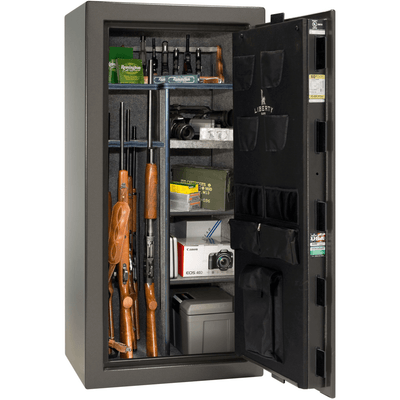
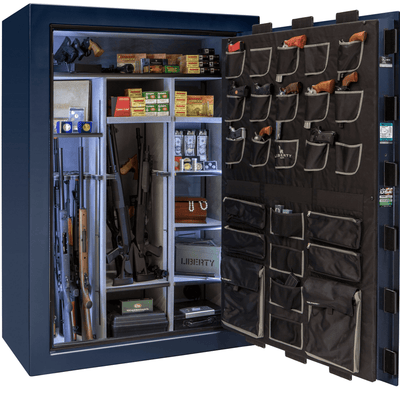
- Interior storage — door organizers, rifle rods, handgun hangers, pistol racks, shelving, jewelry drawers
- Convenience and protection — light kits, power outlet kits, safe covers, floor mats
Most people shop group four first because it's the visible one. In my experience, groups one and three are the ones that determine whether a safe still does its job in ten years.
Anchor Bolts: The Accessory Almost Everyone Skips
If you take one thing from this article, take this: an unanchored safe is not a secure safe.
Liberty ships most of their safes with pre-drilled anchor holes in the floor of the body. The hardware kit is inexpensive. And yet a large share of the safes I've moved for customers over the years were sitting loose on a garage slab, held down by nothing but their own weight.
Weight is not security. A 750-pound safe on a hand truck moves about as easily as a washing machine. Two people with a dolly and a pickup can be down the street in under ten minutes, and once the safe is in a garage somewhere, they have all night to work on it with a pry bar and an angle grinder. The bolt is the difference between a burglar attacking a hardened door and a burglar attacking a safe on its back, where the sheet metal is thinnest and the whole body can be flexed.
A few things I've learned doing this:
- Concrete slab is ideal. We drill with a hammer drill and set 1/2-inch wedge anchors. Done right, you'll destroy the floor before you pull the safe.
- Wood subfloor still works. Long lag bolts into joists, not just plywood. Locate the joists first. Plywood alone will tear out.
- Anchor through the carpet, not on top of it. Carpet and pad compress over time, and a bolt that was tight in March can be loose by September. We cut the carpet at the bolt holes.
- Bolt count matters less than bolt placement. Two anchors set into solid concrete beat four anchors set into the edge of a slab, near a crack, or into a control joint.
This is the one accessory where I'd argue the professional install is worth paying for, mostly because a bad anchor gives you false confidence.
Locks: When an Upgrade Is Worth It
Liberty offers electronic keypads, biometric locks, and traditional mechanical dials, sourced from established lock manufacturers rather than made in-house. All three will keep an honest person out and a curious ten-year-old out. The differences show up in daily use.
Electronic keypads
These are what most customers end up happy with. Fast to open, easy to change the combination when your situation changes. They run on a 9-volt battery that you replace from the outside, so a dead battery is an annoyance and not a lockout. If you're buying one safe and don't want to think hard about it, this is the default.
Biometric locks
These are the ones I get the most mixed feedback on. When they read your print, they're the fastest option there is. When your hands are cold, wet, dusty from the range, or you're at an odd angle because the safe is in a closet, they can take two or three tries. Every biometric lock worth buying has a keypad or key backup. I tell customers to enroll the same finger from several angles, and to enroll a second person.
Mechanical dials
Dials have one real advantage: no battery, no circuit board, and no electronic component that can fail from a power surge or from heat during a fire. They're slower to open. If a safe is a long-term storage vault and not a nightstand, the dial is a perfectly rational choice, and it's what a lot of longtime collectors still prefer.
One thing worth knowing: swapping a lock on an existing safe is usually a straightforward job for a qualified locksmith or safe technician, but it isn't a homeowner project. The lock body sits behind the door panel, and the relocker system is unforgiving of a mistake.
Humidity Control in a Dry Climate (and a Wet One)
Here in Las Vegas, indoor relative humidity often sits well under 30 percent. Customers assume that means they can skip the dehumidifier rod, and for a lot of them, they can. What they can't skip is knowing the number.
A twelve-dollar hygrometer sitting on a shelf inside the safe is the most useful climate accessory you can own, because it tells you whether you need anything else. Most guidance for firearm storage puts the target somewhere around 50 percent relative humidity. Go much above that and you're inviting surface rust on blued steel and mold on leather holsters and gun cases. Go far below it and you can dry out wood stocks over a long enough period.
Where the dry climate does bite people is in the garage. A garage safe in Southern Nevada sees enormous temperature swings between a July afternoon and a January morning. When a safe cools down overnight, any moisture in the air inside condenses on the coldest surface, which is often a steel barrel or a magazine.
Here's what actually works, in the order I'd try it:
- Hygrometer first. Measure before you buy.
- Dehumidifier rod (dry rod) if the reading is consistently high. It's a low-wattage heating element that keeps the interior a few degrees above the surrounding air, so moisture doesn't condense inside. It needs a power outlet, which is why the electrical outlet kit is worth ordering at the same time.
- Desiccant canisters if you have no outlet or no way to run one. They're renewable in an oven and they work, but they're a maintenance item. Set a phone reminder to recharge them.
- Silicone-treated gun socks and a light coat of oil on anything you don't touch often. Simple, cheap, and effective.
If you live somewhere humid, in the Southeast, near the coast, or in a basement anywhere, reverse the priority list. The rod goes from optional to mandatory.
Door Panels, Rifle Rods, and the Real Storage Math
Manufacturer capacity ratings, from every brand, assume long guns stacked barrel-to-stock with nothing on them. No optics, no slings, no bipods, no thumbhole stocks. A safe rated for 30 guns holds maybe 15 to 20 real rifles from a real collection.
This is the gap that interior accessories close.
Door organizers
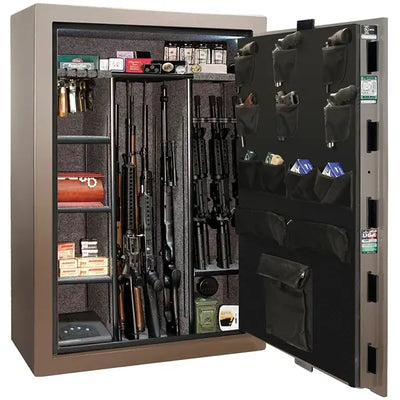
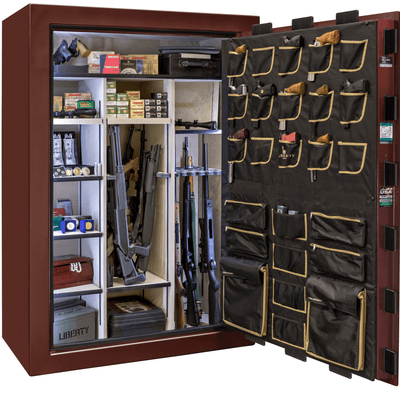
The single biggest usable-space gain available. They pull handguns, magazines, documents, and small items off the shelves and onto the inside of the door, which was dead space. Liberty's panels come in versions sized to specific safe models and include holster pockets, magazine pouches, and zippered compartments. Two notes from the field: a loaded door panel adds real weight to the door, so if your safe was borderline on door sag, this will make it noticeable. And a fully loaded panel changes the door swing clearance you need. Measure before you commit to a corner installation.
Rifle rods
A system where a rod is attached to the rifle's barrel and grips a hook-and-loop backer on the shelf, so guns hang muzzle-up and separated. They're the reason I no longer hear "my scope turret is scratched" from customers who use them. They also let you pull one rifle out of the middle without disturbing the two on either side. For a collection with mounted optics, they're the most useful interior change you can make.
Handgun hangers and pistol racks
These do a similar job for pistols. A hanger suspends a pistol from under a shelf, using space that was otherwise air. A rack keeps pistols upright and separated instead of stacked in a pile where the sights chew up the finish on the one below.
Jewelry drawers and shelving kits
These matter for the safes that don't only hold firearms, which is most of them. Nearly every customer I deliver to ends up storing passports, deeds, hard drives, or a wedding ring in the same box.
Lighting: Small Part, Big Difference
The interior of a safe is a black hole. Even in a bright room, the shelves shadow everything below them, and a safe in a closet is worse.
Liberty's light kits mount along the door frame or under the shelves and switch on when the door opens. They cost less than most people expect, install in under an hour, and they're the accessory customers most often tell me they wish they'd bought at the same time as the safe rather than two years later.
If you're ordering a light kit, order the electrical outlet kit with it. It's a pass-through that lets you run power into the safe without drilling a hole yourself, and once you have it, you can also run a dehumidifier rod, a charging cable for optics batteries, or a small hygrometer with a display.
Will These Accessories Fit Your Safe?
This is the question I get more than any other, and the answer depends on the accessory.
Fits almost anything
- Desiccant canisters and hygrometers. Nothing to mount.
- Most dehumidifier rods, as long as you have interior clearance and power.
- Anchor bolt kits, in the sense that the bolts fit any safe with pre-drilled floor holes. Confirm hole diameter first.
- Safe covers, which are sized by dimension rather than by model.
Fits by size, not by brand
- Rifle rods. They work with any shelf you can attach the backer material to. Many owners retrofit them into older safes.
- Under-shelf handgun hangers, provided your shelf thickness is within range.
Model-specific, check before you buy
- Door organizers. This is where returns happen. A door panel is cut to a specific interior door width and height, and it accounts for the lock body, the handle hardware, and the hinge side. A panel for a 48-inch-wide safe will not work on a 36-inch safe, and a panel from another manufacturer's safe usually won't line up with Liberty's mounting points.
- Light kits with model-specific wiring channels.
- Replacement shelving. Shelf depth and clip spacing vary between series.
Before you order anything model-specific, find your safe's model and serial number. On most Liberty safes it's on a label inside the door or on the back of the body. Write it down, take a photo of it, and keep it somewhere other than inside the safe. You'll also want it if you ever need warranty service or a lock replacement.
If you bought your safe used, or you inherited it, and you can't find the label, measure the interior door opening at its widest and tallest points and bring those numbers to a dealer. We do this over the phone with customers regularly.
Installation and Maintenance
Most Liberty accessories are genuinely DIY-friendly. A few aren't.
Do it yourself with confidence
- Door organizer installation. Usually a matter of a handful of screws into existing threaded holes.
- Rifle rods, handgun hangers, pistol racks.
- Desiccant canisters, hygrometers, and gun socks.
- Light kits, if you have the outlet kit installed.
Consider a professional
- Anchoring. Especially into concrete, or if you're not certain what's under your floor. Hitting a radiant heat line or a post-tension cable in a slab is an expensive mistake, and it happens.
- Lock replacement or upgrade. Behind the door panel there's a relocker designed to lock the safe permanently if the lock is attacked. It doesn't distinguish between an attacker and a well-meaning owner with a screwdriver.
- Drilling any hole in the safe body. You can compromise fire insulation or hit a bolt work component.
Maintenance is short. Once a year, check the hygrometer reading, recharge or replace desiccant, replace the lock battery on a schedule instead of waiting for it to die, and wipe down the interior fabric. Every couple of years, put a wrench on the anchor bolts and confirm they're still tight. Lubricate the boltwork only with what the manufacturer specifies, and never with a heavy grease that will attract dust.
What I'd Buy First on a Limited Budget
If a customer has $300 and asks me where to put it, this is the order every time:
- Anchor bolt kit and a proper install. Under $100 in hardware. It's the accessory that determines whether the safe is still in your house next year.
- Hygrometer. Under $20. It tells you whether you need step three.
- Door organizer. The biggest jump in usable space per dollar.
- Dehumidifier rod and outlet kit, if the hygrometer says you need it.
- Rifle rods, if you have optics or a collection you rotate through.
- Light kit. Not necessary, but the one people enjoy most.
The money isn't really an expense. A door panel that keeps four handguns off a shelf frees up a shelf. Rifle rods that prevent one scratched optic pay for themselves. And an anchor bolt protects the entire contents.
Frequently Asked Questions
Do Liberty Safe accessories fit other brands of gun safe?
Some do, some don't. Rifle rods, desiccant, hygrometers, dehumidifier rods, and most anchor hardware are effectively universal. Door organizers, light kits with wiring channels, and replacement shelves are cut for specific Liberty models and generally won't fit another manufacturer's safe.
Does anchoring a gun safe void the warranty?
No. Liberty safes ship with pre-drilled anchor holes because anchoring is the intended installation. Drilling your own holes somewhere other than the factory locations is a different matter and can affect both the warranty and the fire rating.
How do I know if my gun safe needs a dehumidifier?
Put a hygrometer inside and read it over a couple of weeks. If it consistently reads above roughly 50 percent relative humidity, add a dehumidifier rod or desiccant. If your safe is in a garage, a basement, or a humid region, assume you need one and verify.
Can I install a Liberty door organizer myself?
Yes, in most cases. Panels mount to existing hardware on the inside of the door and the job takes under an hour with a screwdriver. Confirm the panel is sized for your exact safe model before ordering, since this is where most fitment errors happen.
Will a heavy safe stay put without anchor bolts?
No. Weight slows a thief down, it doesn't stop one. A dolly and two people can move a 700-pound safe. Once it's tipped on its back or side, the least protected surfaces are exposed. Anchoring is the single highest-value security accessory you can add.
How often should I replace the battery in an electronic safe lock?
Once a year, on a set date, regardless of whether it still works. On most keypads the battery is accessible from the outside, so a dead battery won't lock you out, but there's no reason to test that.
Are biometric gun safe locks reliable enough for a home defense firearm?
They're fast when they read cleanly. Cold, wet, or dirty fingers reduce reliability. If a biometric lock is on the safe you'd open under stress, enroll multiple fingers from multiple angles, practice with it, and know your backup entry method by feel in the dark.
Do I need an electrical outlet kit?
Only if you plan to run a dehumidifier rod, a light kit, or charge anything inside the safe. If there's any chance you'll want one of those later, install it during the initial setup. Retrofitting means getting behind the interior panels.
Key Takeaways
- Anchor the safe. It's inexpensive, it's the intended installation, and it's the accessory that actually stops a theft.
- Measure before you buy anything model-specific. Door organizers, light kits, and shelves are cut to fit a particular safe. Get your model and serial number first.
- Buy a hygrometer before you buy a dehumidifier. Climate control should be a response to a reading, not a guess.
- Interior accessories buy you real capacity. Rated gun capacity assumes bare rifles. Rifle rods and a door panel are how you get closer to the number on the box.
- Know which jobs are DIY. Organizers, rods, and racks are simple. Anchoring, lock swaps, and any drilling into the body belong with a technician.
If you're not sure what fits your safe, bring the model number, or the safe itself, to our Henderson showroom about sixteen miles southeast of downtown Las Vegas. I'd rather answer three questions in person than take a return.
Written by