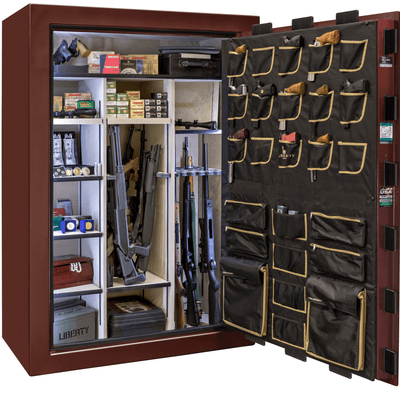

Why You Should Buy Liberty Gun Safe
- Why I Get Asked About Liberty So Often
- Built in the USA, and You Can Feel It
- A Brand That Actually Listens to Owners
- The Security Features That Matter (In Plain English)
- How Liberty Handles Fire
- Warranty and Support You Can Reach
- How to Choose the Right Liberty Safe for You
- What Delivery and Installation Really Involve
- Where Liberty Keeps Pushing the Category
- So, Is Liberty a Good Gun Safe?
- Frequently Asked Questions
- Final Thoughts
Updated: June 2026
Why I Get Asked About Liberty So Often
I've been with The Safe Keeper for more than ten years, and a good chunk of that time has been spent on the delivery side: strapping safes to a dolly, easing them up driveways, and bolting them down in garages, closets, and basements across the Las Vegas valley. My name is Kirillo Byelin, and I run our Las Vegas location and supervise every delivery and install that goes out the door.
So when a customer asks me whether a Liberty gun safe is worth the money, I'm not reading off a spec sheet. I'm answering from the hundreds I've personally moved, opened, and set up in real homes.
Buying a safe is an odd purchase. Nobody wants to overpay for features they'll never use, but a bargain safe that fails on the one day it matters is worse than owning no safe at all. Liberty lands in a spot I respect: strong where it counts, without a lot of showroom gimmicks. Here's what a decade in the field has taught me about the brand, and how to tell whether one belongs in your home.
Built in the USA, and You Can Feel It
Most Liberty safes are built in the United States, and the company has sold more than two million of them over the years. Those are easy facts to print on a website. What's harder to fake is the way a well-built safe feels when you're the person carrying it.
When my crew and I handle a Liberty, the door hangs square, the boltwork slides without fighting us, and the seams line up the way they should. That consistency is the real story behind the "made in the USA" label. A reputation like Liberty's doesn't come from marketing. It comes from millions of units that keep doing their job year after year.
A Brand That Actually Listens to Owners
One thing that sets Liberty apart is how much of its design comes from customer feedback rather than a boardroom. Owners send in requests, dealers like us pass along what we hear on install day, and Liberty's engineers fold a lot of that back into later models.
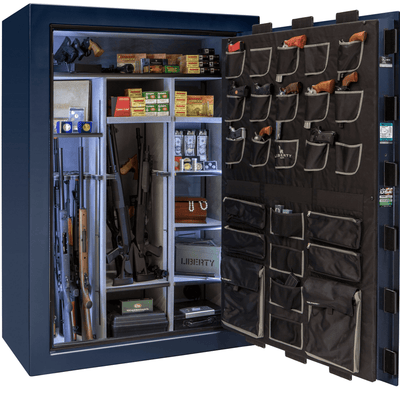
I've watched it happen. Little frustrations owners mention — the way interior shelving is laid out, how the door organizer holds up, how easy the safe is to re-configure — tend to show up as improvements a generation or two later. When a company treats complaints as free R&D, the product gets better for the rest of us.
The Security Features That Matter (In Plain English)
Security is the whole point of a safe, so let me translate the spec-sheet terms into what they actually do for you.
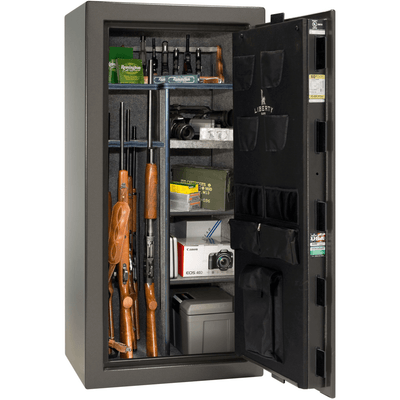
- Unibody construction. The body is formed so the walls and frame work as one piece. In practice, that means fewer weak seams for a pry bar to catch.
- Composite doors. A thicker door with layered material is far harder to peel or punch through than a thin single sheet of steel. The door is where most attacks happen, so this is where thickness earns its keep.
- Hardplates and relockers. The hardplate sits in front of the lock to stop a drill. If someone does attack the lock, the relocker is a backup that slams the bolts shut and keeps them shut.
- Robust boltwork and a slip-clutch handle. Thick locking bars spread the door's hold across more of the frame. The slip-clutch handle spins free if someone tries to force it, so they can't torque the mechanism apart.
None of these features are flashy. They're the quiet, structural things that decide whether a safe holds up when someone actually tries to get in. On a Liberty, they're done well.
How Liberty Handles Fire
Fire protection is the part buyers underestimate most. A break-in is one threat; a house fire is another, and it's often the one that destroys documents, cash, and heirlooms that can't be replaced.
Liberty publishes a fire rating for each model and tests to it using methods that reference National Institute of Standards and Technology guidelines, with furnace testing well above a thousand degrees. The important thing to understand is that fire ratings vary by model. An entry-level safe and a top-tier model don't offer the same protection, so you want to match the rating to what you're storing and how much peace of mind you need.
I've had customers come back years later with photos of a Liberty pulled out of a burned-down house, scorched on the outside but with the contents intact. Those stories aren't a guarantee for every fire, but they line up with what the ratings promise.
Warranty and Support You Can Reach
Liberty backs its safes with a strong warranty, and the coverage goes further than most people expect. If a covered safe is damaged by fire or a break-in attempt, Liberty will typically repair or replace it and cover shipping and installation as part of that process. That last part matters, because moving a safe isn't cheap or easy, which brings me to a point I'll come back to below.
Their support team is based at the factory, so when you call with an oddly specific question, you're usually talking to someone who knows the product inside and out. As a dealer, I'd rather send customers to a manufacturer that picks up the phone than one that hides behind a form.
How to Choose the Right Liberty Safe for You
This is the question I answer most, and it's the one the brochures rarely get right. Here's how I walk customers through it.
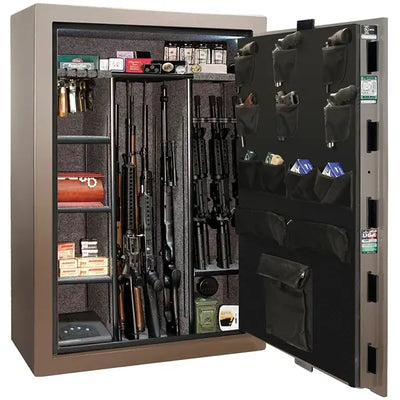
- Buy bigger than you think you need. The "gun capacity" number on the box assumes bare rifles, no scopes, no slings, packed like sardines. In the real world, you'll fit maybe half to two-thirds of that. If you're deciding between two sizes, go up.
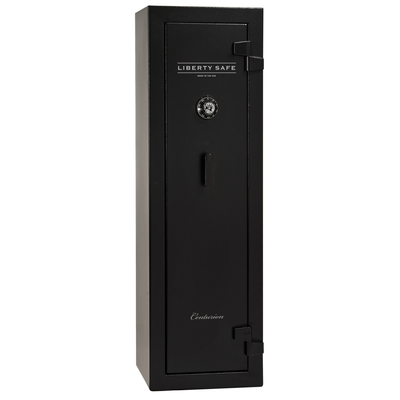
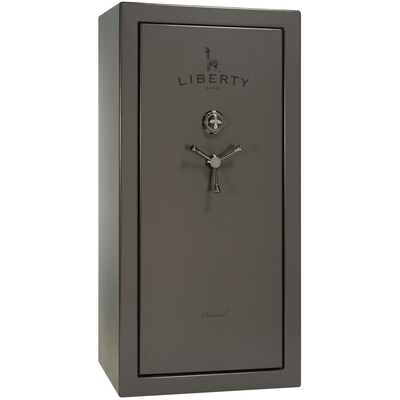
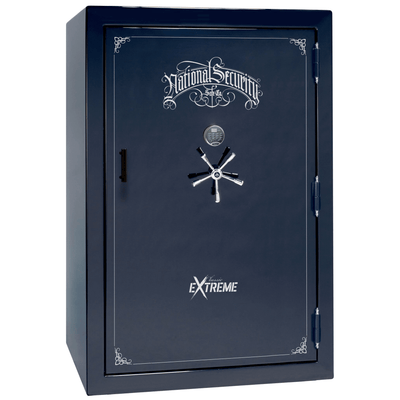
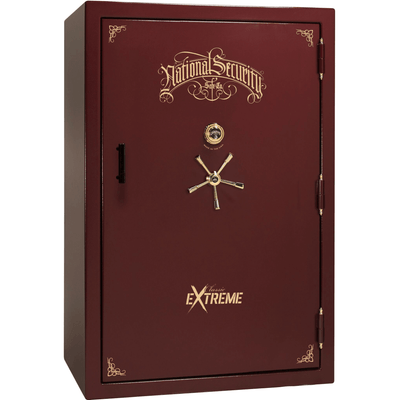
- Match the model tier to the job. Liberty's lineup runs from entry-level lines like the Centurion up through mid-range models and premium builds like the Presidential. The differences that matter are steel thickness, fire rating, and lock quality.
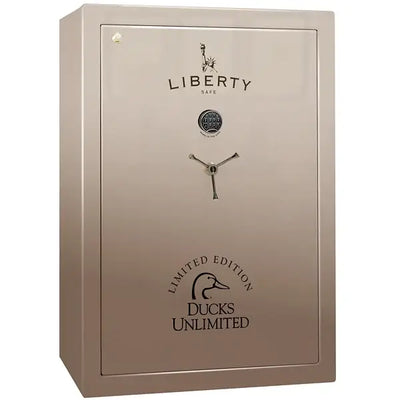
- Common sizes and who they suit. A 12-gun or 24-gun safe fits most single-owner collections and doubles as home-document storage. A 48-gun or 64-gun safe makes sense for serious collectors, or anyone who wants one safe to cover the whole household.
- Think about price as a long-term cost. A quality Liberty safe is an investment you make once. Spending a little more for the right fire rating and enough room usually beats buying a cheaper safe now and replacing it in three years.
- Measure before you fall in love with a model. Know your doorway widths, hallway turns, and where the safe will finally live. A safe that won't fit through the door is a very expensive lesson.
What Delivery and Installation Really Involve
This is the part almost no article talks about, and it's the part I know best. A gun safe isn't furniture. A mid-size model can weigh 500 to 800 pounds, and larger ones push past a thousand. That weight changes everything about getting it home and setting it up right.
A few things I want every buyer to understand before delivery day:
- Stairs and tight turns are the real obstacles. Weight is manageable with the right equipment; a switchback staircase or a narrow hallway is what turns a simple job into a hard one. Tell your dealer about them in advance.
- Flooring matters. Heavy safes can mark soft flooring, so we plan the path and protect surfaces before we roll anything in.
- Anchoring is not optional. An un-anchored safe can be tipped, walked, or hauled away whole. We bolt into concrete or framing so the safe stays put. A bolted-down safe is dramatically harder to steal.
- Placement affects fire and moisture. I steer people away from exterior garage walls where heat builds, and toward a spot with an outlet nearby for a dehumidifier rod. Interior humidity is the slow enemy that rusts guns over time.
You can install a safe yourself, and plenty of people do. But given the weight and the anchoring, this is one of the few purchases where I genuinely recommend professional delivery. I've seen too many pinched fingers, cracked tiles, and safes bolted to nothing to pretend otherwise.
Where Liberty Keeps Pushing the Category
Liberty has introduced a number of features that other makers later followed, including military-style flat locking bars, flexible interior systems that let you reconfigure storage, upgraded door panels, and stronger fire packages. You don't need to memorize the feature list. The point is that the brand keeps refining its safes instead of coasting, which is part of why its older models still hold up.
So, Is Liberty a Good Gun Safe?
Yes. After a decade of handling them, I'd put Liberty among the most dependable safes a regular buyer can get. The build quality is consistent, the security features are the right ones, the fire ratings are honest to the model, and the warranty and support stand behind the product. It isn't the only good brand on the market, but it's one I'm comfortable putting in my own customers' homes.
The catch is the same as with any safe: the model has to fit your actual needs. A Liberty sized and rated for your collection is an easy recommendation. The wrong Liberty for your situation is just a heavy box that cost too much. Choose deliberately, and you'll likely own it for the rest of your life.
Frequently Asked Questions
Where are Liberty gun safes made?
Most Liberty safes are manufactured in the United States, and the company has sold more than two million units over its history.
Is Liberty a good gun safe brand?
Yes. Liberty is widely regarded as one of the more reliable mainstream safe makers, with solid security construction, model-specific fire ratings, and a strong warranty. Just match the model to what you're actually protecting.
How much does a Liberty gun safe weigh?
It depends on the model. Mid-size safes commonly run 500 to 800 pounds, and larger premium models can exceed 1,000 pounds. That weight is exactly why anchoring and professional delivery are worth considering.
Are Liberty safes fireproof?
No safe is truly "fireproof," but Liberty safes are fire-rated. Each model carries a published rating that reflects how long its contents stay protected at high heat. Higher tiers offer more protection, so check the rating before you buy.
What size Liberty safe do I need?
Take the advertised gun capacity and plan on fitting roughly half to two-thirds of it once scopes, ammo, and valuables are inside. A 24-gun safe suits many single owners; serious collectors usually want a 48 or 64. When in doubt, size up.
Does a Liberty gun safe come with a warranty?
Yes. Liberty offers a strong warranty that, on covered safes, generally includes repair or replacement plus shipping and installation after a qualifying fire or break-in attempt. Coverage details vary by model.
Can I install a Liberty gun safe myself?
You can, but these safes are heavy and need to be anchored to be secure. Between the weight, the anchoring, and protecting your floors and doorways, professional delivery and installation is the route I recommend for most buyers.
How much does a Liberty gun safe cost?
Prices span a wide range depending on size, steel thickness, and fire rating, from entry-level lines up to premium models. Think of it as a one-time investment, and weigh the cost against buying a cheaper safe you may outgrow.
Final Thoughts
A safe is one of the few things you buy hoping you'll never test it. When that day comes — a break-in, a fire, a curious kid — you want to have chosen well. Liberty has earned a place on my short list because it holds up in the moments that count, and because the company builds safes I'm confident installing in real homes.
If you're weighing a Liberty and aren't sure which model or size fits your situation, that's exactly the kind of question my team lives for. Reach out and we'll help you match the right safe to what you're protecting, and make sure it gets into your home safely.
Written by